LOSE THE WEIGHT
I've spent the last fifteen years obsessively observing brands, from mass-market giants to tiny indies. The big ones have the resources to show up as they claim to be, even if the way they operate doesn't necessarily reflect their values. The smaller ones often begin with equally powerful claims, but without the capacity to deliver on them, those claims often stay aspirational.
And in 2026, that gap is harder to hide. Your customer has heard every version of luxury, premium, clean, timeless, and sustainable. She's not listening to the words anymore. She's watching what you actually do.
Cheap brands can win on price. Luxury brands can win on status. But premium-ish brands with vague positioning are becoming financially dangerous.
Unless a founder has the clarity, resources and systems to implement her values, those values risk becoming merely decorative.
When I built Daquïni, I called it luxury activewear right away, then "upgraded" it to ethical luxury activewear. I wouldn't do that anymore. Not because it didn't live up to its promise, but because I've learned that positioning is something you show, not describe.
The Black Sheep
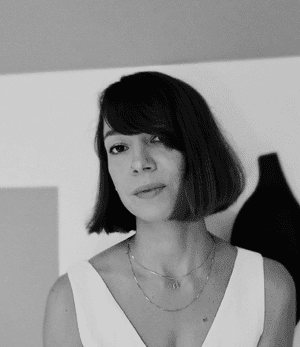
babaà doesn't describe itself as ethical or sustainable. It just operates that way.
Marta Bahillo grew up in Madrid, spending weekends and summers with her grandparents in the mountains in the northwest of Spain. They lived in a small, remote village and grew their own vegetables, flax, and kept chickens. Her grandmother made linen with the women from the village and her other grandmother knitted Marta's school jumpers in 100% wool yarn, always discarding the acrylic ones.
At the time, Marta didn't fully understand those choices. But they stayed with her, and long before she started a business, they were already shaping the way she would think about materials, care, and what it means to make something with integrity.
After studying fashion and textile design in Dublin, she moved to Buenos Aires, where she built close relationships with local wool providers and knitters from Uruguay. But she also saw the other side of scale: sending designs to China for large production runs and receiving them back, in her words, "all soulless."
When she moved back to Spain, pregnant with her first child, she was offered a well-paid job at a major Spanish fashion house. It would have meant leaving the life she wanted with her baby. She turned it down. "I wanted to have a job I loved that allowed me to look after my daughter and also sustain my family."
So she started babaà in 2012, when her eldest, Matilda, was a year and a half old. She found her wool providers through her grandmother, who had once sent them her own fleece for processing. When Marta first approached them, they told her, "This is no business, the wool is going to disappear." Now babaà buys most of their wool.
The factory she works with is family-run and based in the mountains northwest of Barcelona, founded by Salvador in the 1980s and now led by his son Josep. Marta and Josep collaborate directly on each design, guided by the qualities of the yarn itself. babaà creates its own yarn in-house, controlling the production process from the sheep to the final stitch.
"This is good for the environment and the local textile industry but also so good for my soul," she says*. "And I am sure that is what is reflected most in our garments."*
The brand name comes from singing "Baa Baa Black Sheep" to Matilda as a baby.
For over a decade, Marta has been deepening the same idea, the same relationships, the same standards, and the same pace. She built the business around what her structure could support, and what she could fully stand behind. And that might become one of the most profitable decisions a founder can make today.
The Saturday Ritual — a moment to pause
Reflect
What are you holding onto in your brand that no longer reflects who you are or how you want to work?
Review
Where are you spending energy on something the brand promises but that doesn't actually feel like yours anymore?
Realign
What is one thing you could strip away this week so your brand becomes clearer and more true to yourself?
The work is to strip the brand back to its essence and stop carrying the weight of promises it cannot fully embody, so that the inside of the business and the outside of the brand can finally align.
If you want a clear decision-making filter that helps you operate like this, I'm working with a few founders right now to beta test this first layer of The Systëm. Email me if you want in. And if you know someone who needs this, forward them this email.
See you next Saturday,
— Ëmi Antal
Founder of atëmier